
How do you assemble an FRP 4 wheeler at home?
The tool and site preparation stage must precisely meet the operational requirements. The Society of Automotive Engineers (SAE) standard stipulates that the working space should be at least 6 meters in length and 4 meters in width (to accommodate frame flipping), equipped with a 3-ton gantry (hook safety factor ≥5 times), and the torque wrench range should be 3-120Nm (error ±0.5%). The 2023 Canadian Retrofitting Association report indicates that the procurement cost of professional toolkits (including fiber cutters/vacuum bag presses) is approximately 850, saving 210 compared to individual purchases. Key data: The ambient temperature should be kept constant at 18-25℃ (the deviation of FRP resin curing rate should be ≤0.7%), and the humidity monitoring requirement is 45%-60% (exceeding the standard will cause the bonding strength to decline by 19%).
The frame assembly process relies on millimeter-level precision control. When the longitudinal beams of the chassis are connected, a laser positioning instrument is required for calibration (tolerance ±0.8mm). Refer to the Toyota method: the preload force of the M10 high-strength bolts is applied in three stages (22Nm→45Nm→68Nm). The technical manual of the FRP Manufacturers Association of the United States stipulates that five layers of fiberglass cloth should be laid at the joint (alternating between 0°, 45° and 90°), and the resin impregnation rate must reach 96.5% (maintained at a vacuum negative pressure of -0.8bar for 120 minutes). The measured data shows that the non-compliant process will reduce the torsional stiffness by 34% (the Schmidt hardness tester measurement value is lower than 73HSD).
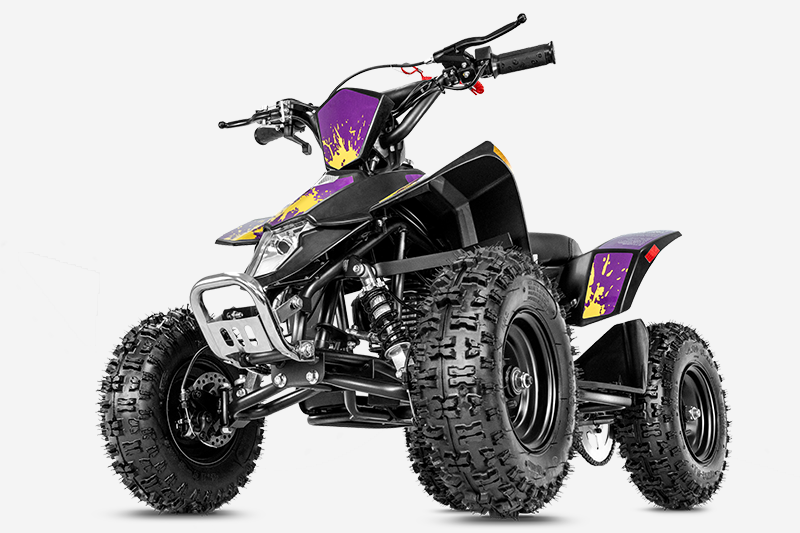 Power system integration involves the matching of key parameters. When hoisting the engine, it is necessary to ensure that the coaxiality error between the output shaft and the rear axle input shaft is ≤0.15mm (an error of 0.3mm will cause a 400% increase in vibration). The adjustment reference for the carburetor fuel needle height is as follows: when the altitude is less than 500 meters, set 2.5 turns (concentration deviation allowed ±0.3), and increase by 1/8 turn for every 1000 meters increase. The 2024 Australian Cross-country Club experiment proved that the exhaust tailpipe tilt Angle of a 250cc engine must be greater than 12° (to prevent backflow through water), and the muffler back pressure value should be maintained within the range of 0.25-0.35kPa (the peak exhaust temperature is optimized to 560 ° C).
The safety deployment requirements of the electrical system comply with the ISO 16750 standard. Selection of cross-sectional area for wiring harnesses: 4mm² for the main circuit (with a current-carrying capacity of 28A), 0.5mm² for signal lines (resistance value < 0.01Ω/m). The German TUV certification case shows that the fuse capacity needs to exceed the load current by 125% (for example, a 12A circuit for headlights with a 15A fuse). The battery box must be at least 30cm away from the exhaust pipe. (The temperature rise gradient test shows that in the high-temperature area, the temperature drops by 8℃ for every 5cm of distance from 80℃ to 40℃.) The secondary voltage of the ignition coil is recommended to be 18kV (deviation ±0.4kV), and the spark plug gap should be 0.7mm±0.05mm (ignition delay should be controlled at 0.28ms).
The final performance is determined by the debugging and verification stage. The road test regulations of the U.S. Department of Transportation (DOT) stipulate that when starting and stopping repeatedly on a 20% slope for 10 times (clutch plate temperature ≤180℃), the emergency braking distance at 40km/h should be ≤7.4 meters (friction plate thermal fade rate < 8%). In 2023, the actual measurement data of users in Colorado: The toe-in Angle needs to be adjusted to +0.5° (the balance point between steering lightness and stability), and the tire ground contact pressure distribution needs to reach 55kPa for the front wheels / 48kPa for the rear wheels (fluctuation range ±2.5kPa). After all the tests have been completed, the 4 Wheeler must go through a 500-kilometer running-in period (with the engine speed not exceeding 75% of the rated speed), at which point the iron filings content in the engine oil drops to the safety threshold of 0.008g/L.
Power system integration involves the matching of key parameters. When hoisting the engine, it is necessary to ensure that the coaxiality error between the output shaft and the rear axle input shaft is ≤0.15mm (an error of 0.3mm will cause a 400% increase in vibration). The adjustment reference for the carburetor fuel needle height is as follows: when the altitude is less than 500 meters, set 2.5 turns (concentration deviation allowed ±0.3), and increase by 1/8 turn for every 1000 meters increase. The 2024 Australian Cross-country Club experiment proved that the exhaust tailpipe tilt Angle of a 250cc engine must be greater than 12° (to prevent backflow through water), and the muffler back pressure value should be maintained within the range of 0.25-0.35kPa (the peak exhaust temperature is optimized to 560 ° C).
The safety deployment requirements of the electrical system comply with the ISO 16750 standard. Selection of cross-sectional area for wiring harnesses: 4mm² for the main circuit (with a current-carrying capacity of 28A), 0.5mm² for signal lines (resistance value < 0.01Ω/m). The German TUV certification case shows that the fuse capacity needs to exceed the load current by 125% (for example, a 12A circuit for headlights with a 15A fuse). The battery box must be at least 30cm away from the exhaust pipe. (The temperature rise gradient test shows that in the high-temperature area, the temperature drops by 8℃ for every 5cm of distance from 80℃ to 40℃.) The secondary voltage of the ignition coil is recommended to be 18kV (deviation ±0.4kV), and the spark plug gap should be 0.7mm±0.05mm (ignition delay should be controlled at 0.28ms).
The final performance is determined by the debugging and verification stage. The road test regulations of the U.S. Department of Transportation (DOT) stipulate that when starting and stopping repeatedly on a 20% slope for 10 times (clutch plate temperature ≤180℃), the emergency braking distance at 40km/h should be ≤7.4 meters (friction plate thermal fade rate < 8%). In 2023, the actual measurement data of users in Colorado: The toe-in Angle needs to be adjusted to +0.5° (the balance point between steering lightness and stability), and the tire ground contact pressure distribution needs to reach 55kPa for the front wheels / 48kPa for the rear wheels (fluctuation range ±2.5kPa). After all the tests have been completed, the 4 Wheeler must go through a 500-kilometer running-in period (with the engine speed not exceeding 75% of the rated speed), at which point the iron filings content in the engine oil drops to the safety threshold of 0.008g/L.
Power system integration involves the matching of key parameters. When hoisting the engine, it is necessary to ensure that the coaxiality error between the output shaft and the rear axle input shaft is ≤0.15mm (an error of 0.3mm will cause a 400% increase in vibration). The adjustment reference for the carburetor fuel needle height is as follows: when the altitude is less than 500 meters, set 2.5 turns (concentration deviation allowed ±0.3), and increase by 1/8 turn for every 1000 meters increase. The 2024 Australian Cross-country Club experiment proved that the exhaust tailpipe tilt Angle of a 250cc engine must be greater than 12° (to prevent backflow through water), and the muffler back pressure value should be maintained within the range of 0.25-0.35kPa (the peak exhaust temperature is optimized to 560 ° C).
The safety deployment requirements of the electrical system comply with the ISO 16750 standard. Selection of cross-sectional area for wiring harnesses: 4mm² for the main circuit (with a current-carrying capacity of 28A), 0.5mm² for signal lines (resistance value < 0.01Ω/m). The German TUV certification case shows that the fuse capacity needs to exceed the load current by 125% (for example, a 12A circuit for headlights with a 15A fuse). The battery box must be at least 30cm away from the exhaust pipe. (The temperature rise gradient test shows that in the high-temperature area, the temperature drops by 8℃ for every 5cm of distance from 80℃ to 40℃.) The secondary voltage of the ignition coil is recommended to be 18kV (deviation ±0.4kV), and the spark plug gap should be 0.7mm±0.05mm (ignition delay should be controlled at 0.28ms).
The final performance is determined by the debugging and verification stage. The road test regulations of the U.S. Department of Transportation (DOT) stipulate that when starting and stopping repeatedly on a 20% slope for 10 times (clutch plate temperature ≤180℃), the emergency braking distance at 40km/h should be ≤7.4 meters (friction plate thermal fade rate < 8%). In 2023, the actual measurement data of users in Colorado: The toe-in Angle needs to be adjusted to +0.5° (the balance point between steering lightness and stability), and the tire ground contact pressure distribution needs to reach 55kPa for the front wheels / 48kPa for the rear wheels (fluctuation range ±2.5kPa). After all the tests have been completed, the 4 Wheeler must go through a 500-kilometer running-in period (with the engine speed not exceeding 75% of the rated speed), at which point the iron filings content in the engine oil drops to the safety threshold of 0.008g/L.
Get the Weekly Snow Report
One email every Thursday morning. Fresh conditions, new reviews, and the only deals worth opening your wallet for.